For some time I have been bothered by people making Wildflower Mead. I mean…it’s just so generic. I often ask, when either judging a competition or just tasting someone’s product, where the wildflower honey is from or if they know what the “wildflowers” are. The answer is always a NO. I don’t blame people for this lack of knowledge. Most people rarely even think to ask that sort of question. Having lived in many states and traveled quite a bit, I have had the opportunity to taste many kinds of honey…I especially love to taste wildflower honey because it gives me that glimpse into that plethora of variations of flavor and color. Let me begin by saying this, though the first project blog post, will be the longest and continually updated. My goal is to work my way through wildflower honeys across the world. I will separate each individual project by region, state, country, etc. I will also, to the best of my ability, discover the specific flora in the pollination zone for each honey. I will also give a description of each honey as to flavor and color. For consistency, I will limit every project to one brand of yeast, particular water content, and proportions. If I should change any of those variables, notes will be made and published.
Mini Experiment-Guadalupe County
I was fortunate to find myself at a local farmers market in San Antonio, TX. There I found a table from Holdman Honey (holdmanhoney.com) which had wildflower honeys from several counties in Texas. After tasting them, I settled on the Guadalupe County which had a nice bold flavor with some fruitiness. I purchased a half gallon container (12lbs) from which I made two 1 gal batches. I wanted to find a good yeast to use for the larger experiment. Mangrove Jack’s (mangrovejacks.com) Mead Yeast M05 had great reviews and seemed a good choice.
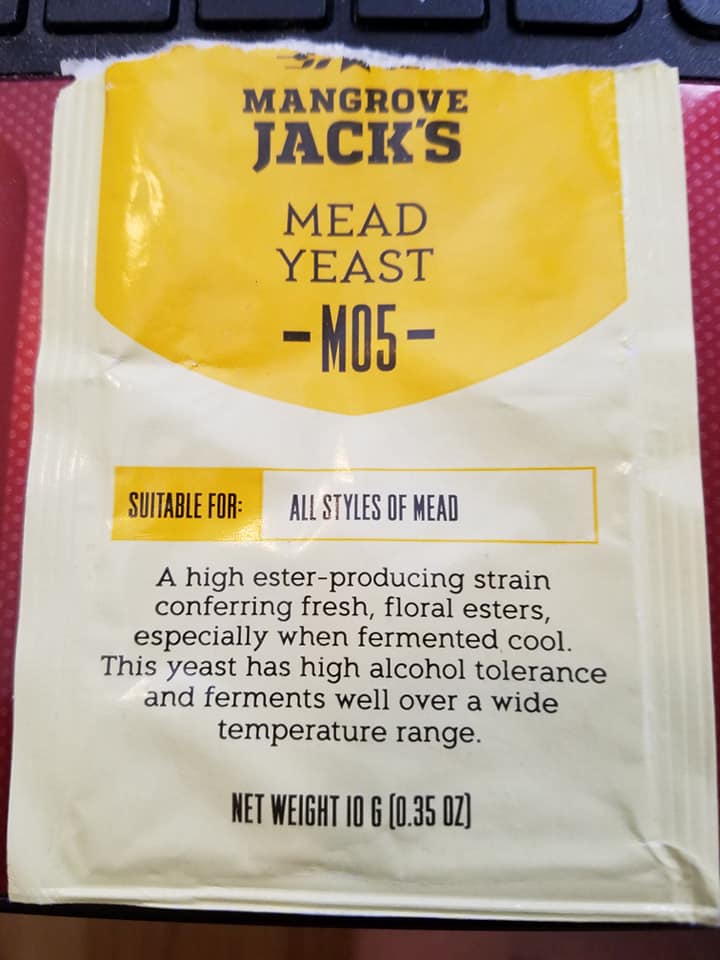
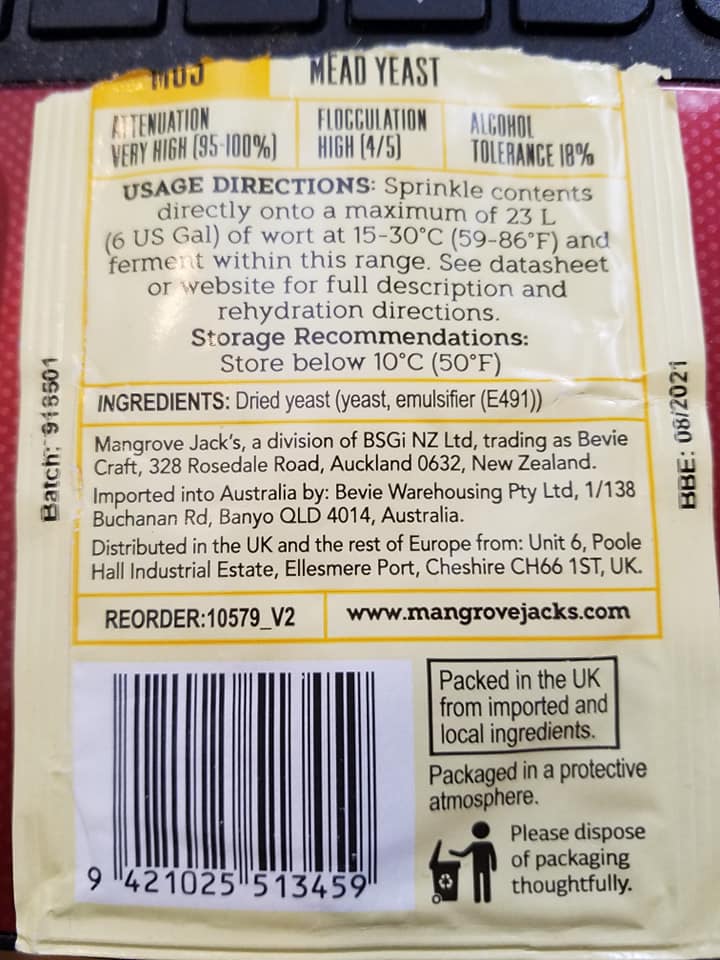
Though eventually made into two batches, they began as one. After the incorporation of the water and honey, the starting gravity reading was 1.110. I did not have a scale on hand (something I will be changing in the future when intending to make smaller batches that will not be using an entire packet of yeast) so I attempted to split the yeast as best as I could by sight…hence the results of batch A and batch B. I had signs of active fermentation within 15 minutes of pitching the yeast and good, strong fermentation for the next several days. At the end of week 2, bubbling had slowed, but remained steady. End of the month saw extremely slowed bubbling and both batches were allowed to rest and naturally clarify over the next month.
Here is where it becomes interesting… Both batches were kept in a location with relatively little direct sunlight and a fairly constant temperature. I proceeded to take readings from both batches and they came out identical (or as best as I could tell) with a final gravity of 0.995 giving them an ABV of 15.09%. Color and clarity are also the same. Batch A was as I would expect, semi-dry to dry, clear alcohol strength. Batch B, on the hand, had a surprise. It was slightly sweeter than A. I can only guess that in a very slight difference in the gravity reading falls that sweetness. I am not very worried about the result of this mini experiment as my only intent was to test the ingredients for positive results and further products created during this project will be made in single 5 gallon batches.
 Mood Dragon Brewing